
EU member states split over size of share of research budget for widening measures and allocation key
EU
European Union
member states remain divided over how much money to allocate to measures to build capacity in countries with poorer research performance under the next medium-term budget for 2028-2034.
Member-state officials responsible for research policy have discussed the issue of so-called widening measures 13 times over the past few months as part of a broader debate on the EU’s next Horizon Europe research programme under the 2028-2034 Multiannual Financial Framework (MFF
Multiannual financial framework
). The proposal was also discussed by EU ministers for research at their Council meeting in Brussels on 09/12/2025.
Denmark, the country that holds the rotating presidency of the EU’s Council of Ministers until 31/12/2025, has drawn up what is known as a ‘negotiating box’ which sets out the progress that has been made on the negotiations on the MFF for 2028-2034 since the European Commission presented its proposals in July.
While the “box” is not binding on any of the 27 member states, it shows where there is a provisional agreement pending a deal on the entire budget package.
The “box” includes language on how to allocate funds for widening, saying that “from 2030 onwards, capacity-building measures are restricted to those widening countries that have increased their real expenditure of public investment in research and development in the latest known year compared to the year prior”.
This sentence is in square brackets in the text, indicating that it is not agreed upon by the member states. But its presence indicates divided views between the member states, usually between those that have benefited from widening measures in the past and are in favour of retaining this dedicated funding, and those that believe excellence in research should be the priority in allocating research funding.
Commission proposes splitting countries into two groups based on research performance
In its July proposal, the Commission envisages providing €5.837 billion for widening measures as part of funding for the European Research Area. The total proposal for Horizon Europe for 2028-2034 is €175bn.
The Commission advocated dividing the member states that have been eligible for widening funding during the current MFF (2021-2027) into two groups, depending on their research performance in 2023-2025:
- transition countries, which have a rating on the EU’s Innovation Scoreboard above 75% of the Union average;
- and widening countries, all other Member States eligible under the 2021-2027 period.
The proposal lists the widening countries as Bulgaria, Croatia, Czechia, Hungary, Latvia, Lithuania, Poland, Romania and Slovakia, while the transition countries are Cyprus, Estonia, Greece, Malta, Portugal and Slovenia.
Ministers from widening countries call for in-depth debate on measures including funding
Several ministers expressed concern at the research Council in December at the lack of progress on the issue of widening, including Slovenia’s Igor Papić, while Portugal’s Helena Canhão said that a “more thorough discussion” was needed on the topic.
The Hungarian minister János Csák said that widening measures should remain part of the next Horizon Europe programme. Czechia’s representative, Štěpán Černý, said that the issue of widening should be “unbracketed”, i.e that it should be discussed before final agreement on the size of the overall MFF.
Sweden’s minister, Maria Nilsson, on the other hand, said that the principle of excellence in research “cannot be compromised”.
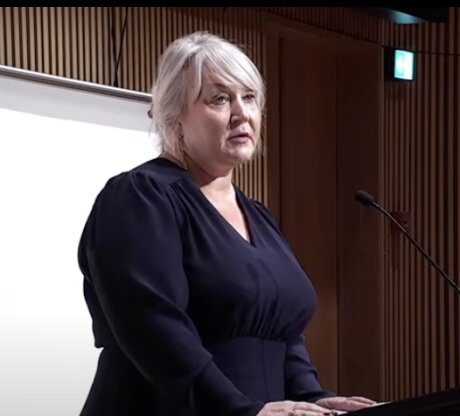
The meeting was chaired by Denmark's science minister, Christina Egelund.
Deal on size of total MFF budget only expected at end of December 2026
Denmark declared at the start of their presidency in July that all issues related to the size of the budget allocation for individual programmes (such as Horizon Europe) or headings (Horizon falls under heading 2, which deals with competitiveness, prosperity and security) should be bracketed, i.e. only decided at a later stage. This usually means in the final stage of negotiations on the size of the overall MFF among the 27 member states.
EU leaders call for deal next year so programmes can be in place for January 2028
EU leaders discussed the MFF during their summit in Brussels on 17-18/12/2025. The summit conclusions said they “took note of the presentation of the draft Negotiating Box developed by the Danish Presidency and held an exchange of views on the future Multiannual Financial Framework”.
They called for the next presidencies to continue the work to get agreement on the MFF “before the end of 2026 that would allow for the adoption of legislative acts in 2027”. Leaders said that it was necessary to ensure that EU funding reaches beneficiaries without interruption in January 2028.
Work passes to Cypriot and Irish presidencies of the Council of Ministers
Work on the proposals for the Horizon Europe programme and the European Competitiveness Fund will continue under Cyprus’ presidency of the Council, which starts on 01/01/2026 and runs until 31/07/2026. The Cypriot presidency is likely to draft a new negotiating box by the end of its six-month term, while EU officials have told News Tank that they expect the final agreement to be reached during Ireland’s presidency, which runs until the end of December next year.
© News Tank Academic - 2026 - French copyright law: "Infringement of copyright (...) is punishable by three years imprisonment and a €300,000 fine. Infringement consists of all forms of reproduction, display or circulation of any intellectual work, in any medium, in violation of the rights of the author."
To discover all our content, subscribe now
Join our subscriber community by selecting your preferred subscription plan (monthly or annual) or try it for free for 30-day.